DeFi Wallet: The Complete Guide to Secure Crypto in 2026 Now
As a cryptocurrency owner, you have to have a secure repository to keep your cryptocurrencies. A DeFi wallet provides you with that security and complete control of your money. No one else has your keys like a bank account. You do.
DeFi is a term that refers to decentralized finance. A DeFi wallet directly links you to blockchain applications, exchanges, and lending platforms. There’s no middleman. There’s no waiting for approval. You and your assets are all alone.
The yearly trend is to abandon centralized exchanges for a better life. With hacks and frozen accounts, along with unexpected charges, users are opting to self-custody. It resolves these issues by allowing you to take control of your finances.
This guide offers you a step-by-step explanation of all you need to know. You will learn what a DeFi wallet is, what the various types of wallets are, and how to select a wallet that is suitable for you. You will also discover how to install it and make it secure. If you’re just getting started with crypto or coming from an exchange account, there are simple steps below for you.
What Is a DeFi Wallet?
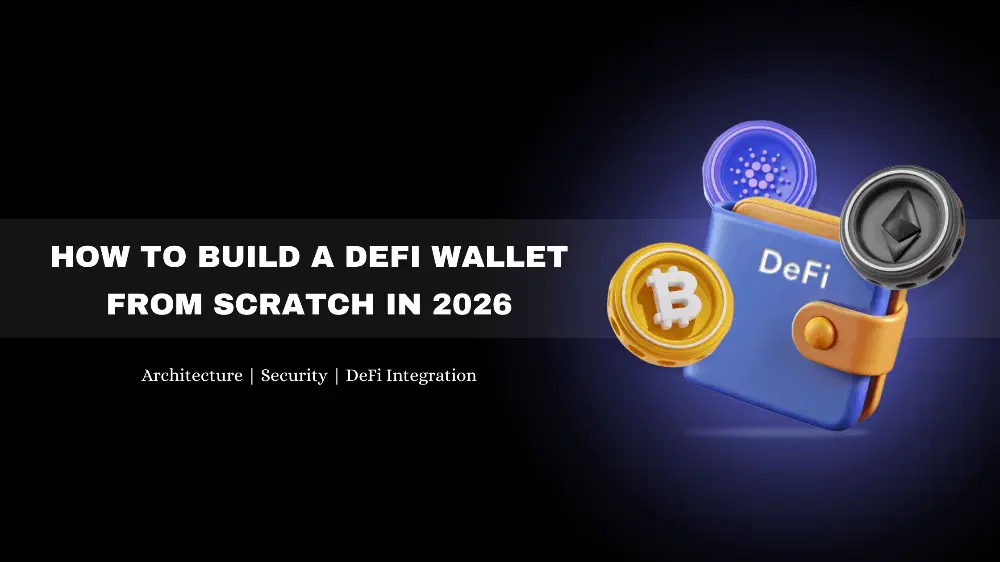
A DeFi wallet is an online application that stores your personal keys. Those keys are the proof of ownership of your crypto! They also enable you to sign transactions within the blockchain.
Consider it a personal vault! It’s up to you to be the key. You will not allow any bank, exchange, or company to freeze it.
It not only holds coins; it can also hold other data. A good one is “a decentralized application”, or ‘dApp ‘.With this connection, you can:
- Trade tokens on DEXes
- Lend or borrow crypto, without the need to get a bank involved.
- Place stakes to fetch prizes
- Buy and sell NFTs
- Participate in the governance of blockchain. Cast votes for blockchain governance.
This is not how funds are stored on a centralized exchange. On an exchange, you leave your keys with the exchange. You’re giving a business your cash! In self-custody,y that middleman is cut out.
The importance of a DeFi wallet in 2026.
The use of cryptocurrencies continues to rise. So does the number of scams, exchange collapses, and account freezes. Self-custody eliminates so many of these risks.
Why more users are migrating month after month:
- Full ownership. Your private keys are in your control. No one can even lock you out.
- The ability to gain direct access to DeFi apps. They allow you to borrow, lend, farm yield, and trade without opening a new account each time.
- Reduced charges on various platforms. You avoid intermediaries’ service fees.
- Better privacy. Typically, DeFi wallets do not require a person’s identification to register for an account.
- Securing against transaction failures. When an exchange failure or hack occurs, the money remains within the exchange is lost. Any money in your own wallet remains with you.
All of this is not to say that self-custody is completely safe. It’s just a passing on of responsibility from a company to YOU. That’s a balance that’s important to understand before getting started.
Types of DeFi Wallets
Not every wallet has the same functionality in this space. The choice of type is determined by how the crypto is to be utilized.
Hot Wallets
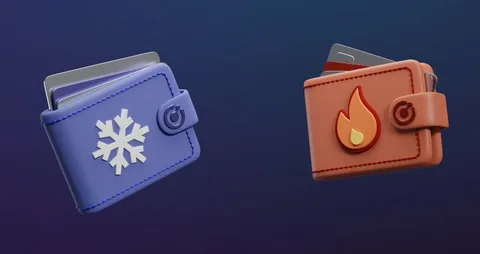
A hot wallet remains online. These can be extensions or mobile applications.
Hot wallets make for convenient access to cryptocurrencies. They can be opened in seconds with the ability to connect to any dApp. This makes them ideal for everyday use in trading, swapping, and engaging with DeFi websites.
The negative aspect is exposure. Hot wallets are more susceptible to hacker and phishing attacks since they’re always connected to the Internet.
Cold Wallets
A cold wallet is a wallet where the keys are not stored online. The most common are hardware devices.
By default, cold wallets are not connected to the internet, so they are much more difficult to hack. This is conducive to keeping large volumes of crypto in a secure place for the future.
The compromise is in terms of convenience. You’ll need to plug in your device each time you want to sign a transaction. It slows things down, but it provides an extra amount of security.
Custodial vs Non-Custodial: What’s the Difference?
It’s very important to note this difference.
A custodial wallet is a wallet that is run by a third party and stores your private keys for you. There are many exchange-based wallets that fit into this category. Easy, but it means that you are giving others your money.
A non-custodial wallet is when you, and only you, have the keys. Non-custodial wallets are the norm with true DeFi wallets. The whole idea of decentralized finance is to put the middleman out of the picture.
Use a non-custodial service if self-custody and control are important to you.
Explain how to select the best DeFi wallet.
There are myriad options available, and choosing the right one may seem daunting. Pay attention to these three aspects.
Security Features
Avoid wallets that have the following characteristics:
- Backing up and recovering seeds
- Biometric or PIN-based protection
- Multi-signature Support (for additional approval steps)
- Open-source code that has undergone outside security audits.
Investing in a wallet that has impeccable security procedures and is transparent is more of a concern than investing in one that has extra features for flash.
Supported Blockchains
Not all wallets are compatible with all blockchains. Some focus on a single network. Others back dozens of chains and thousands of tokens.
Consider what the real blockchains you use are. If you are active in multiple networks, select a wallet that supports multiple chains. This eliminates the need for managing five apps.
Ease of Use
If the menus are not easy to follow, it will be costly because of mistakes. Check out the ease of backup procedures, clearly defined transaction confirmations, and a tidy interface.
For beginners, search for wallets that offer robust customer support and educational materials.
The following are the best options that you have to consider in 2026.
They are most likely going to fall under one of 3 categories:
- Browser extension wallets are ideal for using DeFi daily and accessing dApps at a glance.
- Mobile app wallets – suitable for on-the-go trading and straightforward to use.
- Hardware wallets – ideal for long-term storage of large amounts of crypto.
Many expert users mix the two types together. They keep a small percentage in a hot wallet for daily use and a large portion in a cold wallet. It’s convenient, and at the same time, it’s very secure.
Once you have picked a wallet, read the latest reviews, audit reports,s and community feedback to see if they are a good choice. The DeFi space is quite dynamic, and reputations can very quickly change.
How to Set One Up (Step-by-Step): How to install one step-by-step easily.
It only takes a few minutes to set one up. Please read these instructions carefully.
- Select your wallet type. Choose a hot wallet, cold wallet, or a combination of both.
- Get it from a reliable source. Always download apps from the official website or trusted app store listing. An Actual wallet Application is a common scam.
- Make a new wallet. The app will create a unique seed phrase (typically 12 or 24 words).
- Take note of your seed phrase. Use pen and paper. Don’t save it as a picture or as a cloud note.
- Check your seed phrase. Most wallets prompt you to re-enter the words for confirmation that you saved the right ones.
- Make a strong PIN or password. If your device has this feature, use biometric protection.
- Fund your wallet. Move crypto from an exchange or get crypto from a different wallet address.
- Connect to a dApp. Test the connection prior to sending bigger quantities.
It’s ready to be used after setting up with virtually any decentralized platform.
Security of crypto wallets: tips.
Self-custody means self-responsibility. Here are some good rules of thumb for protecting your finances.
- Avoid revealing your seed phrase. If they ask you for it, it wouldn’t be a legit support team.
- Keep a large amount of crypto on the hardware wallet. Store small quantities of active funds in hot wallets.
- Double-check every URL. The interface of the phishing sites can be an almost perfect copy of the real wallet.
- Enable transaction confirmations. Check the document you’re signing before agreeing to it.
- Update software programs regularly. Newly discovered vulnerabilities are patched with updates.
- If possible, use a separate device. Do not use a device to download and/or surf the web for large volumes of funds.
Doing these will not make you invincible, but it will go a long way to remove the most common ways to attack you.
Some of the most typical errors people make.
Even the veterans make mistakes. Be aware of these errors:
- Keeping your seed phrase securely on a computer. Security breaches can occur, and a photo or cloud note can be hacked or leaked.
- Granting any number of tokens. Certain dApps ask permission to have access to unlimited money. Use alternative limits, though.
- Ignoring wallet updates. Outdated applications may have vulnerabilities that are known.
- Being able to connect with unverified dApps. Make sure you verify the authenticity of a platform before connecting a wallet.
- Maintaining all your money in a single wallet. Dispersing holdings between a hot wallet and a cold wallet decreases overall risks.
The key to protecting your crypto long-term is to avoid these mistakes.
The Future of DeFi Wallets
These tools continue to get better each year. You can look forward to easier client sign-up, built-in fraud detection, and intelligent multi-seed phrase recovery.
The cross-chain support is also rapidly growing. Newer ones enable users to handle their assets from one application across multiple blockchains without having to switch apps regularly.
Some wallets might include optional identity verification for some features as regulations change. Despite that, the overall concept of a DeFi wallet, giving the user complete control over their money, won’t be going away anytime soon.
For Newcomers vs Advanced Users:
That doesn’t emean veryone have to have the same setup. It’s important to adjust your priorities as you gain experience and assets.
For the novice, it’s all about simplicity. Choose a user-friendly application that has a strong user base and provides support. Try playing around with small transactions until you have got a handle on how transactions, gas fees, and confirmations operate.
Stacking of chains and speed are more important if you are an active trader. Seek immediate switch options, minimum fees, and versatility of tokens to avoid forced app changes during the transactions.
However, security is the first consideration for long-term holders. A simple hardware device and backup strategy are better at safeguarding large balances than convenience tools.
There are no right answers. Simply set up your environment in the way that you work with crypto in real life, and adapt as your habits evolve.
Conclusion
The most important thing to remember is to choose the wallet that is right for you and your crypto investments.
A DeFi wallet brings you back in control over your funds. No more placing trust in a company to guard what’s yours.
It requires some research to select the right one, but it’s not difficult and will pay off. Make security, supported by blockchain, and ease of use the main focus. Next, practice good habits to safeguard your money and protect it over the long term.
Looking to the future? Make sure to download a reputable non-custodial DeFi wallet today and take control of your cryptocurrency business with the location you’ve earned.