Lowest Fee Crypto Exchange for US Traders: Compared
If you’ve spent any time buying or selling crypto, you already know fees have a sneaky way of eating into your returns. Finding the lowest-fee crypto exchange for US traders isn’t just about bragging rights. It’s about keeping more of your own money every single time you trade.
The tricky part is that “low fees” means something different depending on how you trade. A casual buyer who checks in once a month has very different needs than a day trader placing dozens of orders a week. Some platforms advertise rock-bottom headline rates but bury real costs in spreads and withdrawal charges. Others are upfront about maker and taker fees but require high volume before you see meaningful discounts.
This guide breaks down exactly how crypto exchange fees work, which platforms currently offer the best deals for US-based traders, and how to avoid the hidden charges that quietly drain your account. By the end, you’ll know how to pick the lowest-fee crypto exchange for US traders based on your own trading style — not just a headline number in an ad.

“Low Fee” Actually Means
Before comparing platforms, it helps to understand what you’re actually being charged for. Crypto exchanges rarely charge just one fee — they charge several, and the combination determines your real cost per trade.
Maker and Taker Fees Explained
Most exchanges use a maker-taker model:
- Maker fees apply when you place a limit order that doesn’t execute immediately, adding liquidity to the order book.
- Taker fees apply when your order executes immediately against an existing order, removing liquidity.
Taker fees are almost always higher than maker fees, because exchanges want to reward traders who add depth to the market. If you place mostly market orders, you’ll pay taker rates every time — one of the fastest ways to overpay without realizing it.
The Hidden Costs: Spreads, Withdrawals, and Network Fees
Trading fees only tell part of the story. Watch out for:
- Spreads — the gap between the buy and sell price, common on beginner-friendly apps that skip a visible commission.
- Withdrawal fees — charged when you move crypto off the platform, and these vary a lot by coin and network congestion.
- Deposit fees — usually free for ACH transfers, but wire transfers and card purchases often carry a real cost.
- Currency conversion fees — relevant if you’re funding your account in a way that isn’t a direct USD deposit.
A platform can look cheap on the homepage and still cost you more overall once spreads and withdrawal charges are factored in. That’s why serious comparisons of the lowest fee crypto exchange for US traders always look at the full fee schedule, not just the advertised trading fee.
Finding the Lowest Fee Crypto Exchange for US Traders in 2026
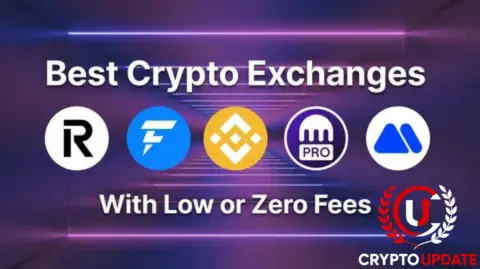
Here’s how the most commonly used, US-available platforms stack up. Fee tiers change often based on trading volume and promotions, so treat these as a starting point and always confirm current rates directly on each platform before funding an account.
Kraken — Best for Traders Who Want Tiered Volume Discounts
Kraken has built a reputation as one of the more transparent options for cost-conscious traders. Its standard tier charges a modest maker fee and a somewhat higher taker fee, but both drop substantially as your 30-day trading volume increases. High-volume traders using Kraken Pro can push fees down close to zero on the maker side. Kraken is also frequently cited for its clean security track record, which matters just as much as price when you’re choosing where to hold funds.
Coinbase — Best for Beginners Who Want Predictable Costs
Coinbase’s standard app carries higher built-in spreads than advanced platforms, which historically made it a pricier choice for frequent traders. However, its Coinbase One subscription flips that equation by offering zero-fee trading up to a set monthly volume for a flat membership cost. For someone making a handful of trades a month, that subscription can make Coinbase one of the more competitive picks — as long as you actually use enough of that fee-free allowance to offset the monthly cost.
Binance.US — Best for High-Volume Spot Trading
generally posts some of the lowest base maker and taker rates among major US-available platforms, with further discounts available at higher volume tiers or when fees are paid using the exchange’s native token. Binance.US fee schedules have shifted over time as the platform’s regulatory footprint in the US evolved, so double-check before you trade.
Gemini — Best for Institutional-Scale Volume
Gemini’s standard web and mobile experience carries a higher convenience fee that isn’t ideal for small, frequent trades. But its ActiveTrader platform tells a very different story: at the highest volume tiers, Gemini’s maker and taker fees drop to some of the lowest in the industry. If you’re trading at scale, it’s worth the extra setup step to access those rates.
OKX and Robinhood — Best for Casual, Flat-Fee Buyers
For traders who just want a simple, predictable cost without digging into maker-taker tables, OKX offers a flat spread option alongside its advanced trading mode, while Robinhood built its crypto offering around a similarly simple flat-percentage structure. Neither is likely to beat a dedicated low-fee exchange for active trading, but both remove the guesswork for occasional buyers. OKX resumed US operations under a stricter compliance framework after a past regulatory settlement, which is worth knowing even though the platform has since operated under continued monitoring.
How to Actually Compare the Lowest Fee Crypto Exchanges for US Traders
Headline rates make for good marketing, but they don’t always reflect what you’ll pay. Use these checks before deciding.
Look Beyond the Advertised Rate
Always pull up the exchange’s full fee schedule — not just the number in their ad. Check maker fees, taker fees, deposit methods, and withdrawal costs for the specific coins you plan to trade.
Match the Exchange to Your Trading Style
- Occasional buyer: a flat-fee app or a subscription model with a fee-free allowance may cost less overall than a “cheaper” per-trade rate you rarely use enough to benefit from.
- Active trader: volume-tiered platforms reward you the more you trade, so the lowest fee crypto exchange for US traders in your case is whichever one gets you into a better tier fastest.
- Long-term holder: withdrawal and network fees matter more than trading fees, since you’re moving coins into cold storage rather than trading frequently.
Check Regulatory Standing and Security History
A slightly higher fee is a small price to pay for a platform with a clean security record and clear US regulatory compliance. Before chasing the absolute lowest number, confirm the exchange is properly registered to operate in your state and has a track record you’re comfortable with.
Tips to Reduce Your Crypto Trading Fees Even Further
Even after picking a low-fee platform, small habits can shave more off your costs.
Use Limit Orders Instead of Market Orders
Since maker fees are almost always lower than taker fees, placing limit orders rather than market orders can meaningfully cut your average cost per trade over time.
Take Advantage of Native Token Discounts
Several exchanges reduce fees when you pay with their native exchange token. If you’re already comfortable holding that token, this is one of the simplest ways to lower your effective rate.
Consolidate Trades to Reach Higher Volume Tiers
Rather than splitting orders across multiple small trades, consolidating volume can push you into a better fee tier faster on platforms that reward 30-day trading activity.
Compare Withdrawal Networks Before You Move Coins
Withdrawal fees vary widely by blockchain network. Choosing a cheaper network option, when the exchange offers a choice, can save a surprising amount if you move funds regularly.
Common Mistakes That Quietly Push Up Your Trading Costs
Even traders who’ve done their homework on the lowest fee crypto exchange for US traders can still overpay through avoidable habits. Watch out for these three:
Trading on Mobile Apps With Built-In Spreads
Many exchange mobile apps default to a simplified “buy now” experience that bakes a spread into the price instead of showing a separate fee line. It feels cheaper because there’s no visible commission, but the spread often costs more than a transparent maker-taker fee would. If your exchange offers an “advanced” or “pro” trading view, use it — the same platform can be noticeably cheaper once you switch out of the simplified interface.
Ignoring Withdrawal Fees Until It’s Too Late
It’s easy to focus entirely on trading fees and forget that moving crypto off an exchange isn’t free. Network congestion can push withdrawal costs up sharply at busy times, so if you’re planning to move funds to cold storage, timing the withdrawal — and checking whether the exchange offers a lower-fee network option — can make a real difference.
Staying on the Default Fee Tier Out of Habit
Many exchanges quietly upgrade your fee tier once you cross a volume threshold, but only if the exchange tracks that automatically — some require you to opt in or verify additional account details first. Traders who never check their current tier often keep paying introductory rates long after they’d qualify for a discount.
Tax and Compliance Considerations for US Crypto Traders
Lower fees help your bottom line, but don’t forget that every taxable event still needs to be reported. The IRS treats digital assets as property, meaning trades, sales, and even some transfers can trigger a reportable gain or loss. For up-to-date requirements. The IRS Digital Assets page is the most reliable outbound resource to link to, since exchange-specific fee structures and tax rules both change from year to year.
Final Thoughts: Choosing the Lowest Fee Crypto Exchange for US Traders
There’s no single “best” answer here — the lowest fee crypto exchange for US traders is the one that matches how you actually trade. Frequent, high-volume traders will usually save the most on tiered platforms like Kraken, Binance.US, or Gemini’s ActiveTrader. Casual buyers may come out ahead with a simple flat-fee app or a subscription model. Whichever direction you lean, the same rule applies: read the full fee schedule, factor in spreads and withdrawal costs, and don’t chase a discount that isn’t worth the security or compliance trade-off.
Ready to stop losing money to fees you didn’t know you were paying? Compare current fee schedules side by side today, and pick the lowest fee crypto exchange for US traders that actually fits how — and how often — you trade.